
What to Wear for Headshots and Corporate Photoshoots
The question we get more than any other, usually the night before the shoot. Here is everything we tell our clients, in one place.
We photograph a lot of people, and the question is always the same. It usually arrives by email around 9pm the night before, which is a little late to be buying a new blazer. So here is the whole answer, in the order it actually matters.
The short version
- Solid colors in tones that already suit you.
- Nothing pure white on its own. Layer it under something.
- No logos, no text, no loud patterns.
- Fit matters more than price. Tailoring is the best money you will spend.
- Bring two or three options, not one.
- Layers photograph well. A shirt under a blazer adds depth.
- Steam everything the night before.
- Sleep, drink water, and get your haircut about a week out.
Forward this to your team before a group shoot. It saves everyone a lot of morning-of texting.
Color
Wear colors that already suit you
You probably already know which colors you get compliments in. Those are the ones. Nicole is Chinese with yellow undertones, which is exactly why yellow does her no favors, and she will tell you so herself. If you are stuck, lay your options out on the bed, take a photo, and send it to us. We are happy to help you pick.
Skip pure white on its own
Pure white overexposes easily, and it picks up color from whatever is around it. Green grass, a painted wall, a bright window: all of it casts onto white fabric and shows up in the final image. White under a blazer or a cardigan is a different story and works beautifully.
Learn a little color theory, then stop worrying about it
If you enjoy this sort of thing, look up your seasonal color analysis and see which family suits your skin tone. If you do not, skip it. Nobody has ever looked worse in a photo because they did not know their season.






Style and fit
Wear something you actually like
The outfit should make you feel confident. Clothes you love do something to your posture and your face that no amount of direction from us can fake.
Solids are timeless. Patterns need care
You do not need to avoid patterns entirely, but the loudest thing in your closet is not the move. High-contrast prints pull attention straight off your face. Subtle patterns with some variance in tone work well. When in doubt, solid wins.
No big logos, no text
Both are distracting, and both date a photo fast. The exception is your own company logo, which is often exactly the point.
Nothing worn out
Favorite shirts get worn a lot, and it shows. Bright colors fade, knits start to pill, collars soften. A camera at this resolution is not kind to any of it. Reach for the newer piece.
Fit beats everything
This is the one that matters most, and the one people skip. Baggy adds weight, tight adds tension, and both pull the eye to the wrong place. Getting a jacket taken in is cheaper than most people expect and makes more difference than anything else on this list.
Keep accessories simple
Timeless and classic. Jewelry should be part of the outfit, not the subject of the photo. If you wear glasses, clean them. Fingerprints and smudges show up clearly and are annoying to retouch out.
Bring more than one outfit
Two or three, with different colors and textures. It gives you options once you see yourself on the monitor, and it means one set of photos can work for LinkedIn and another for the website.
Do not think about your shoes or your pants
We are photographing you from roughly the chest up. Wear whatever is comfortable. You will be standing for a while.
Layer
A shirt under a blazer or a sweater adds depth and dimension, and it gives us two looks out of one outfit by taking the top layer off.
Steam and iron
Lay your clothes out the night before and steam them. Retouching exists, but pressing a shirt takes two minutes and fixing a wrinkled one in post takes considerably longer and never looks quite as good.
Tell us what you want it to say
This is the most useful thing you can do, and almost nobody does it. A younger associate angling for a promotion wants to read older and more certain. A defense attorney may want to look like someone you would not want across the table. A therapist wants to be distinguished and approachable at once. Say the word out loud and we will light and direct for it.





The days before
Sleep and drink water
Both show up in your skin, your eyes, and your lips. Start a couple of days out, not the morning of. Lip balm the night before if you are prone to chapping.
Do not get a haircut the day before
Four to six days out is the sweet spot. Fresh cuts read as fresh cuts, particularly on men, and hair needs a few days to settle into how it actually sits.
Professional hair is worth it
Not to look like someone else. Your hair should look the way you normally wear it, with small adjustments for the camera. Product is your friend, mostly for keeping flyaways down under studio light.
So is professional makeup, even for a natural look
The goal is you on a good day, not a different person. We can bring in full glam, lighter touchups, or grooming depending on what you want. Ask and we will build it into the quote.
Tidy the details
Brows, beard, mustache, ears, nose. These are small things that become large things at high resolution.


Real shoots, real outfits. Solid colors, a little layering, and tones that already suited the person wearing them.
What to wear for your industry
There is no single standard, and anyone who tells you otherwise has not photographed enough different rooms. What matters is what is normal in your field, and then dressing slightly better than that. Here is roughly how it breaks down.
If you work in corporate, law, or finance
Conservative colors and formal outfits are the norm, and there is a reason for it. Neutrals keep the attention on your face rather than your clothing. Jewel tones are worth considering too, royal purple, emerald, a deep red, because they flatter a wide range of skin tones and hair colors. Avoid neon and avoid anything with a loud repeating print.
If you wear a suit and tie
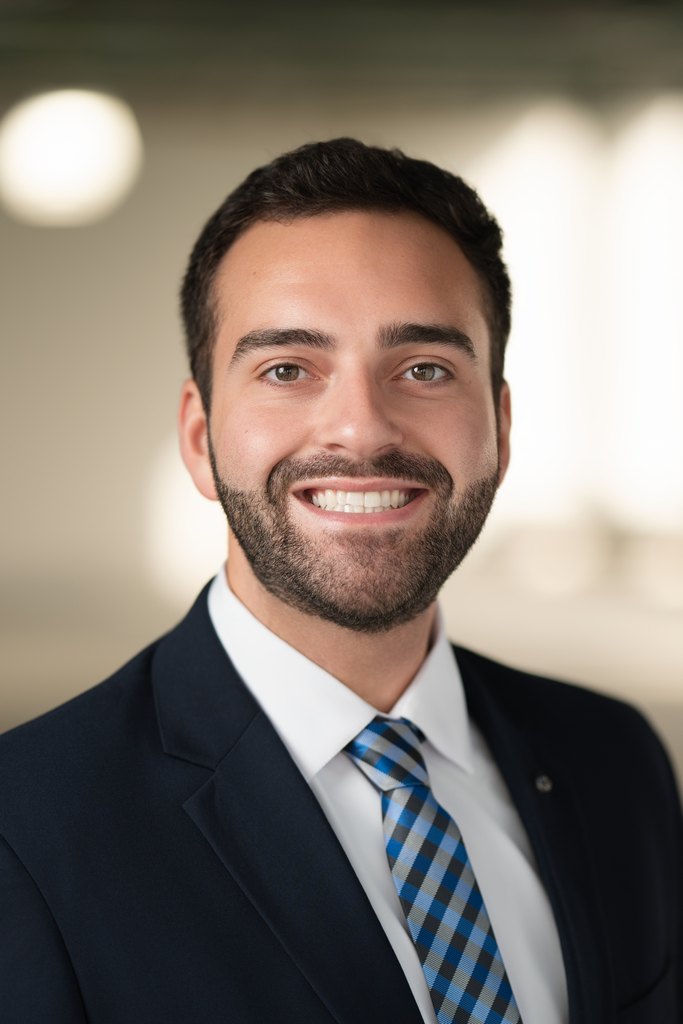
A dark suit with a shirt and tie is a staple for a reason. Pick a tie that sits somewhere between the suit and the shirt in tone. Heavily reflective silk can look harsh under studio light, so matte or textured tends to photograph better. If you are going without a tie, avoid a plain white shirt with no jacket, since white on its own loses the detail and folds that give a photo depth.
If you are in tech, a startup, or a creative field
The rules loosen considerably. Jeans and color are perfectly normal. Use the clothing to say something about the work: an artist might choose colors that echo their practice, or deliberately contrast with the space. The only real constraint is that it should still look like you on a Tuesday.
If you are an actor or model
Simple wins. T-shirts and tanks are the most common choice, and for good reason. Anything too styled risks typecasting you before anyone has read your name. Color can be trendy or bold as long as it does not pull focus from your face.


A lounge, a gallery, a boardroom, an exam room, a rooftop. What is normal in your field is the right place to start.
One last thing
We tether to a monitor on set, so you will see your photos as we shoot and you can change course if something is not working. If a shirt is reading badly, we will know in the first two minutes and you will still have the other outfit in your bag. That is the whole reason we ask you to bring one.
Still not sure? Photograph your options and send them over. We would much rather answer an email than have you standing in front of a backdrop wishing you had worn the other jacket.
And if you have not settled on a background yet, that decision shapes what works best to wear. Our guide to choosing a background walks through all three options.
Booking headshots for your team?
We come to your Boston office, bring a monitor so everyone sees their photos as we shoot, and have retouched files back within 24 to 48 hours.
See How It Works