
How to Get a Headshot You Like When You Hate Having Your Photo Taken
What nervous people are really afraid of, what we do about it, and how to get the person who keeps skipping headshot day to show up.
She told Nicole before they had even made it through the door. "I hate photos. I'm awkward. I'm uncomfortable. No one has ever been able to take a good photo of me." We hear some version of that at almost every headshot day we run. Here is what we have learned about it, and why it is usually the easiest problem of the day to fix.
The short version
- You are not camera shy. You are uncomfortable being watched and judged, which is a different problem with a different fix.
- Nobody relaxes because they were told to. So we never say it. We talk to you instead.
- The good frame comes when you stop posing. Usually mid-laugh, or a second after.
- You see every photo as we take it. We shoot tethered to a monitor, and you pick your own.
- Booking for a team? Skip to getting the holdouts to show up.
What happened next
Nicole did not argue with her, and she did not tell her it would be fine. She asked her name. Then she asked what she did last weekend, and what she was looking forward to this fall. They talked about hobbies, then about the bucket list: the trips and experiences she had been dreaming about and had not gotten around to yet.
Then Nicole asked the question she likes to save for last. "If you had 60 million dollars, what's the one irresponsible thing you would buy?"
That got a real laugh, the kind you cannot fake. Her shoulders came down. Her face stopped holding itself in place. For a moment she was thinking about something much more fun than her own face.
"You're all done," Nicole told her. "Now give me the happiest look you have ever given."
And she did. That was the photo.
What camera-shy people are actually afraid of
Almost nobody is afraid of the camera itself. What people dread is the feeling of being studied by a stranger while they try to hold a smile that already feels fake. The moment someone knows they are "on," they start managing their face like a project. Chin down. No, up a little. Shoulders back. Every small correction confirms that they are being evaluated, and people who feel evaluated do not relax.
That is why "just be natural" never works. It turns a feeling into an instruction, and nobody can follow it.


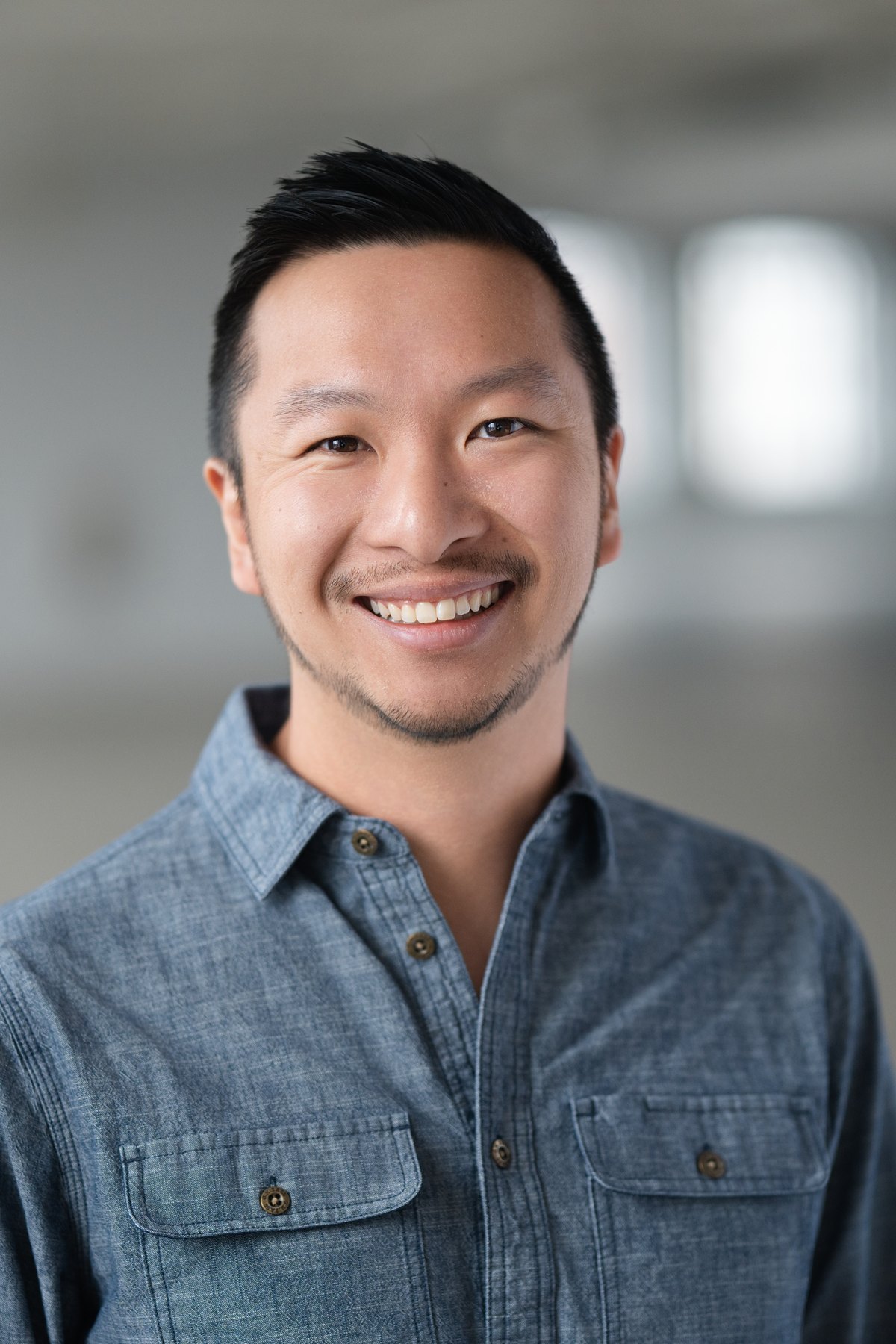

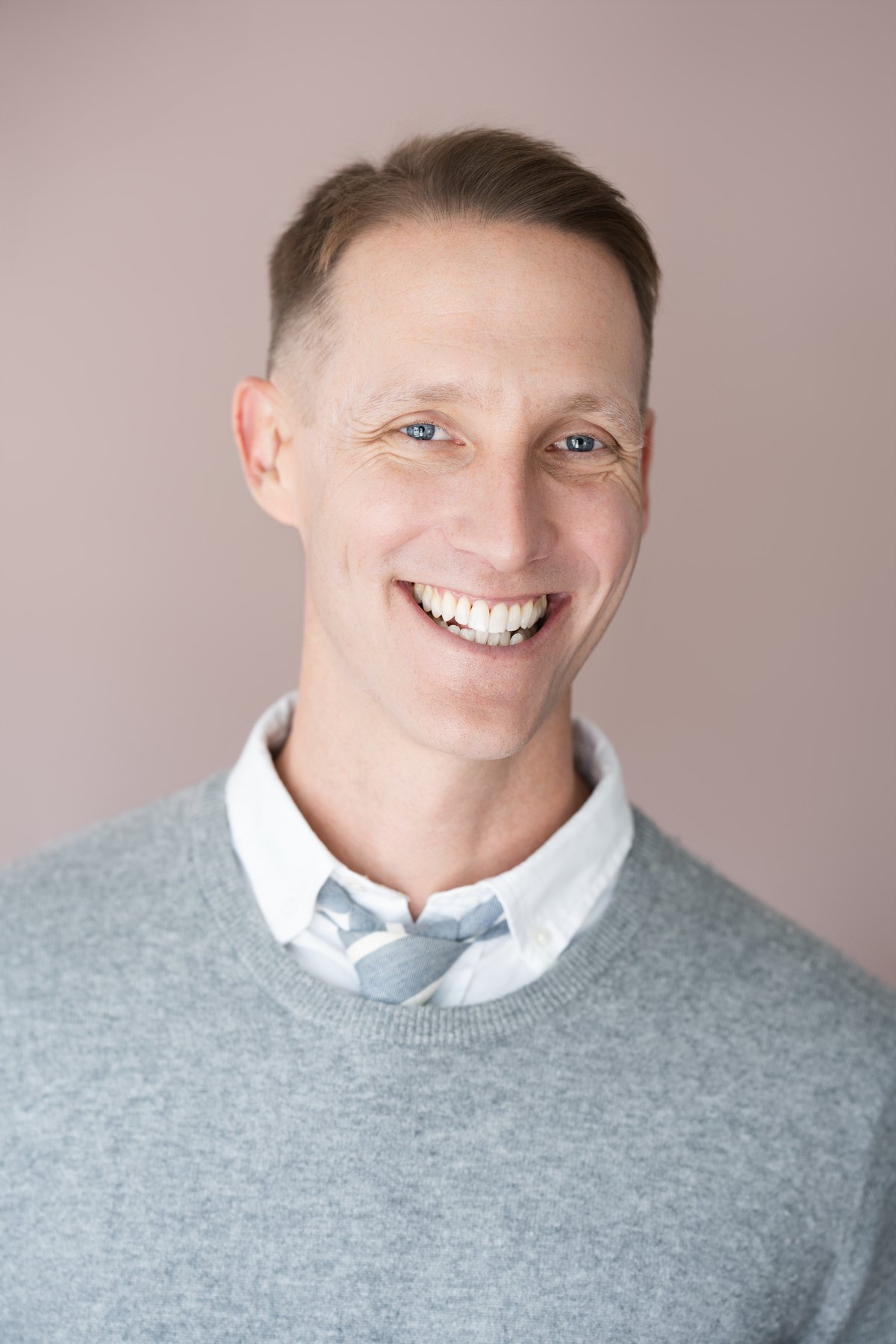

The smile you cannot hold on command is the one that shows up on its own once you stop thinking about it.
What we do instead
We direct a conversation, not a face
Weekends, pets, kids, travel, hobbies, the terrible first job, the thing you would buy with money you will never have. We are not making small talk to fill time. We are giving your brain something better to do than monitor your expression, and we are watching for the second your guard comes down.
We take the photo when you are not posing for it
The frame people love is rarely the one where they were trying hardest. It is the moment right after a laugh, or right before you answer a question, when your face is doing what it actually does when you are happy. We shoot through the conversation so we catch it.
We are not trying to win
We are not there to catch anyone off guard or to prove we can outsmart their nerves. The goal is simple: a photo you look at and think, that looks and feels like me. Your personality should be in it, not a performance of what you think professional is supposed to look like.
You see it as it happens
Every frame comes up on a monitor as we shoot, so nothing is a mystery. You choose the one you like before you leave, and if a stray hair or a crooked collar is bothering you, we fix it right there. Professional retouching on the photo you pick is included.
If you are the one who hates photos
Tell us
Saying "I hate this" at the door is not a problem. It is useful. It tells us to slow down, talk more, and skip the posing instructions until you are ready for them.
Do not rehearse a smile
Practicing in the mirror trains the exact expression that looks stiff on camera. You will get a better result by showing up with something on your mind that you would actually enjoy talking about.
Wear something you feel like yourself in
If you are fidgeting with a collar or a jacket that does not fit, it shows. Our guide on what to wear covers the rest.
Look at the monitor
Seeing a good frame early changes how the rest of the session feels. Most people loosen up the second they realize the photos are going better than they expected.


If you are booking headshots for your team
Every company has at least one person who has been dodging headshot day for months. They are not being difficult. Nobody enjoys feeling watched, and they have probably been handed a photo they hated before. A few things make it much easier to get them in the chair.
Tell them they pick their own photo
This is the single most reassuring thing you can say. Most people's fear is being stuck with a photo someone else chose. Knowing they will see every frame and make the call themselves takes most of the pressure off.
Do not put them first
Schedule the nervous ones after a few colleagues have gone. By then they have heard from coworkers that it was quick and painless, and we have a rhythm going.
Give them a heads up, not a summons
"Pick a slot that works for you" lands very differently than a mandatory calendar block. Each person takes five to six minutes, so there is room to be flexible.
Let us know who they are
If you tell us ahead of time that someone is dreading it, we will plan for a little more time and a lot more conversation. Those are often our favorite sessions of the day.
The part that matters
A great headshot has very little to do with being photogenic. It comes down to whether the person in front of the camera felt comfortable enough to stop performing. When we connect with someone on a human level first, the guard comes down on its own, and the photo that follows looks like them on a good day. That is the whole job.
Have a team full of people who hate photos?
Those are our favorite people to work with. We come to your Boston office, bring a monitor so everyone sees their photos as we shoot, and have retouched files back within 24 to 48 hours.
See How It Works